
Nereyda Falconi, Ph.D.
Quantitative Ecologist | Spatial Ecologist | Mission-Driven Scientist
Teaching Philosophy
Beyond my research, my passion lies in fostering the curiosity and drive of emerging scientists. I strive to challenge the students I mentor in a supportive, healthy, and collaborative environment, equipping them with the critical-thinking and technical skills needed to thrive in science.
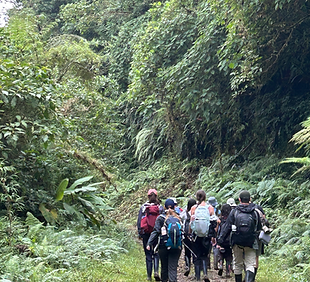
Invited Faculty | PSU Tropical Field Ecology (Costa Rica)
This immersive field course provides students with a comprehensive, hands-on overview of diverse tropical ecosystems, designed for senior undergraduate students. Over the duration of the course, we visit five distinct ecological zones—including lowland and montane rainforests, tropical dry forests, wetlands, and coastal marine habitats—to study tropical flora, fauna, and their complex biotic interactions.
Approach: Rather than focusing solely on observational learning, the course is structured to build independent scientific leaders:
-
Guided Foundations: Students initially join ongoing, faculty-led research projects to master robust field methodologies and data collection techniques.
-
Independent Investigation: Empowered by their newly acquired knowledge and skills, students transition into principal investigators, designing and executing their own original field projects from the ground up.
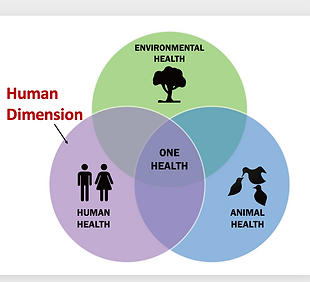
Co-Instructor | Human Dimensions
Designed for PhD candidates in Conservation Medicine, this advanced seminar explores the evolution of the human dimensions framework and its critical integration into the natural sciences and wildlife health. The course challenges doctoral students to look beyond purely biological metrics to evaluate how sociological, economic, and policy frameworks dictate conservation outcomes.
Pedagogical Framework:
-
Epistemological Evolution: Tracing the history of human dimensions as a distinct scientific field and analyzing its modern intersection with veterinary, medical, and ecological disciplines.
-
Case Study Analysis: Utilizing complex, real-world case studies (such as policy dynamics, human-wildlife conflict, and socio-ecological systems) to dissect successful and failed conservation interventions.
-
Applied Doctoral Research: Students design and develop their own targeted research projects, putting theory into practice by embedding human dimension methodologies into their specific doctoral research areas.